
Bumblebee Monitoring at Quin Abbey
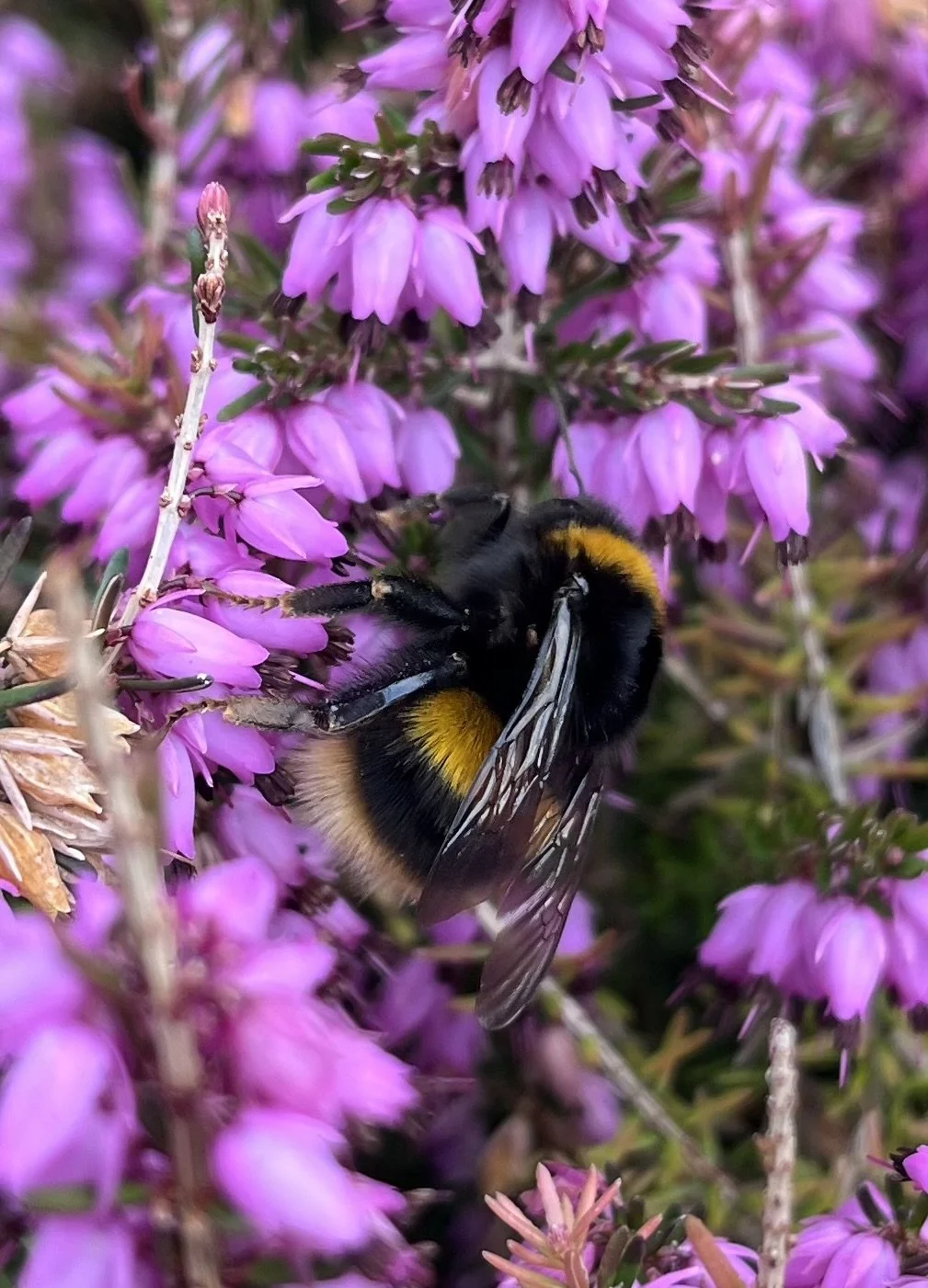
In March 2026, Quin Village Tidy Towns established a formal bumblebee monitoring transect at Quin Abbey as part of the All-Ireland Bumblebee Monitoring Scheme — a national citizen science programme run by the National Biodiversity Data Centre, established in 2012 and one of the first of its kind globally. The scheme tracks Ireland's widespread bumblebee species and generates population data used to assess the impact of the All-Ireland Pollinator Plan.
The transect route runs through the semi-natural grassland surrounding the abbey. The site was selected following an ecology meeting in February 2026, during which the habitat was assessed as well suited to a monitoring route — particularly as a reduced mowing regime is being introduced in the abbey grounds. The route was put into practice during a bumblebee monitoring workshop organised by Quin Village Tidy Towns in March 2026, led by ecologist Áine Ní Fhlatharta.
On that first walk, Red-tailed, White-tailed and Buff-tailed bumblebee queens were recorded — species fresh from hibernation and already foraging in the abbey grounds. Over 95% of bumblebee sightings in Ireland are of seven common species: Buff-tailed, White-tailed, Early, Garden, Common Carder, Heath and Red-tailed bumblebees. Recording these species consistently over time allows changes in population to be tracked and linked to habitat management decisions.
Volunteers walk the fixed route monthly from March to October, counting bumblebees within a set recording area and noting weather conditions. All data is submitted to the National Biodiversity Data Centre. To ensure the abbey grounds continue to support bumblebees, the majority of the grassland is being managed as a long-flowering meadow — reducing mowing frequency and always removing cut grass to lower soil fertility and encourage native wildflowers over time. Pesticide use has been eliminated across the site.
The walks are open to everyone. No prior experience is needed.