
Arbutus Grove Nature & Sensory Garden Trail
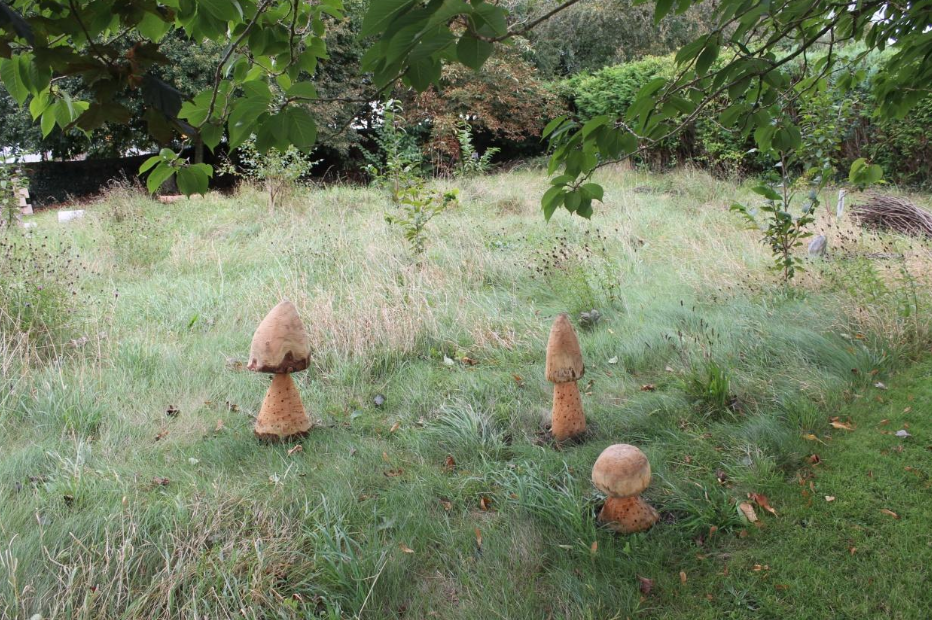
Arbutus Grove is a third-of-an-acre area of community land located to the southwest of Scoil na Mainistreach national school in Quin, accessible directly from the school through a connecting gate. Because of its proximity to the school there is no need for children to walk on a public road or use transport, making it an ideal location for outdoor nature education.
The site has been maintained as a wildlife garden for a number of years by local resident David Lawrence. It contains semi-natural grassland, a treeline of mature Cherry, Birch, Rowan, Horse Chestnut, Lime and Acer along the perimeter, flower beds with pollinator-friendly planting, approximately 50 metres of boundary stone wall with ferns, lichens and ivy, and areas of unmanaged habitat including dead wood piles. Native wildflowers recorded on the site include Self-heal, Lesser Bird's-foot Trefoil and Honeysuckle. The site is pesticide-free and has been managed as a wildlife garden for many years.
In 2026, Quin Village Tidy Towns worked with ecologist Áine Ní Fhlatharta to develop a Nature and Sensory Garden Trail plan for the site, designed for use by Scoil na Mainistreach as an outdoor classroom. The plan builds on the existing wildlife garden and is guided by two principles: increasing the biodiversity value of the site, and creating meaningful nature connections for the children who use it.
The plan proposes a sensory trail with six sensory zones covering touch, sight, hearing, taste, smell, and movement and balance. Natural seating made from tree stumps will form the focal point for outdoor classroom sessions. A small wildlife container pond will be created from a recycled bath or similar vessel, providing habitat for dragonflies, damselflies, water beetles and amphibians, and a drinking and bathing source for birds and mammals. A living willow dome and tunnel will be planted using Osier Willow, which can also be harvested by the children for natural crafts. Native hedgerow planting along the boundary with the school will provide food and shelter for pollinators, birds and small mammals throughout the year.
A Flower-Insect Timed Count station with instructional signage and QR code will be installed to support the school in participating in national citizen science recording. Children will also be able to take part in the Bumblebee Monitoring Scheme, Butterfly Monitoring Scheme and Backyard Biodiversity surveys from within the garden. A forest school area using the mature trees will provide opportunities for activities including bark rubbing, den building and nature journalling.
The site is pesticide-free and will continue to be managed as a wildlife habitat throughout. All proposed additions are designed to work with the existing habitat rather than replace it.